
Categories
Career Satisfaction Coaching Confidence

The Ultimate Guide to Negotiating Post-Interview Offers Like a Pro

You’ve aced the interview and received the offer, and now it’s time for the next critical step—negotiating.But many executives, even at the highest levels, leave money and benefits on the table simply because they don’t know how to negotiate effectively.

Negotiation is not just about salary—it’s about ensuring your entire compensation package reflects your value and positions you for long-term success. Yet, professionals often approach this phase with uncertainty or hesitation, either out of fear of losing the offer or simply not knowing how to navigate these conversations.

This guide will walk you through the steps to negotiate like an executive, ensuring you secure the best possible package and start your new role on solid ground.

The Executive Mindset: Treat Negotiation as a Strategic Discussion

Shift Your Perspective: Negotiation is Collaboration

  • Successful negotiation isn’t about confrontation—it’s a strategic conversation between two parties. As an executive, your role is to create a win-win outcome where you and the company are invested in your success.
  • Key Tip: Approach the discussion confidently, understanding that the employer expects negotiation and respects candidates who advocate for themselves.

Understand Your Leverage

  • Employers know your value—that’s why they made you the offer. Your unique skills, experience, and fit for the role give you leverage. It’s not just about what you’ve done in the past but what you can bring to the company’s future.
  • Key Tip: Before entering the negotiation, clearly define your value and how it aligns with the company’s goals. Leverage this to justify your asks.

Preparing for the Negotiation: Do Your Homework

Research Compensation Benchmarks

  • Salary is just one part of the package, and knowing industry standards for your role in your region and sector is key. Research salaries, bonuses, equity options, and other benefits that executives at your level typically receive.
  • Key Tip: Use resources like salary benchmarking tools, industry reports, or even confidential conversations with recruiters to gather data on what is reasonable to request.

Know What Matters Most to You

    • It’s not just about the salary. Consider other elements like stock options, signing bonuses, performance bonuses, vacation time, flexible working arrangements, and professional development opportunities.
    • Key Tip: List your top priorities before the negotiation and clarify what you’re willing to compromise on. This helps you stay focused on your objectives.

Prepare Your Justifications

  • Once you have your priorities, prepare clear justifications for each one. Why is a higher salary justified based on your experience? How will additional vacation time benefit both you and the company?
  • Key Tip: Tie each request to the value you bring. For instance, “Given my track record in driving revenue growth by 20% in my previous role, I’m confident I can deliver significant results here, and I believe a higher base salary reflects this potential.”

Executing the Negotiation: Timing, Tactics, and Tone

  1. Timing is Key
  • It’s essential to start the negotiation process only after you’ve received a formal offer. This gives you the clearest picture of what’s on the table and allows you to counter strategically.
  • Key Tip: Key Tip: Don’t rush to accept the first offer, but don’t delay too long. Acknowledge the offer, express enthusiasm, and ask for time to review it in detail before initiating the negotiation.

Tactics for an Effective Negotiation

  • Start with Gratitude: Open by thanking the employer for the offer and expressing excitement about the opportunity. This sets a collaborative tone.
  • State Your Requests Confidently: When making your counteroffer, be specific and direct. Avoid being vague with phrases like, “Is there room to negotiate?” Instead, say, “Based on my experience and the value I bring, I would like to discuss increasing the base salary to $X.”
  • Ask Open-Ended Questions: Rather than framing requests as ultimatums, ask questions like, “What flexibility is there on the signing bonus?” or “Could we explore additional stock options?” This encourages dialogue and opens the door for creative solutions.

Tone and Delivery Matter

  • Negotiating is as much about how you present your requests as it is about what you’re asking for. Maintain a professional, respectful tone, and aim for a constructive conversation.
  • Key Tip: Practice active listening. If the employer raises concerns or counters your request, show you’re open to collaboration. For example, “I understand the budget constraints you mentioned. Is there another way we can meet in the middle, perhaps with a performance bonus or stock options?”

The Total Package: Look Beyond Salary

Evaluate Non-Monetary Benefits

  • Salary may be the headline figure, but non-monetary benefits often have long-term value. These include stock options, retirement contributions, wellness benefits, flexible work arrangements, and continued education stipends.
  • Key Tip: When evaluating these perks, consider your personal and professional goals . For instance, if you value work-life balance, additional vacation days or remote working options might outweigh a modest salary increase.

Negotiate for Long-Term Success

  • Beyond immediate compensation, consider elements that can benefit your long-term career growth, like executive coaching, leadership development opportunities, and pathways to further promotions.
  • Key Tip: Ask questions like, “What opportunities for leadership development and growth does the company offer?” This shows you’re thinking strategically about your future with the organization.

Mistakes to Avoid During Negotiation

Accepting the First Offer Without Discussion

  • Even if the offer looks excellent, never accept it outright without at least reviewing it and asking questions. Companies expect negotiation you may miss out on additional benefits by accepting too quickly

Focusing Only on Salary

  • Salary is important, but focusing solely on it can lead to overlooking other valuable elements of your package. Keep a broader view and assess all parts of the offer.

Using Threats or Ultimatums

  • Avoid issuing ultimatums like, “If you don’t meet this request, I will walk.” This can create tension and damage the relationship before you’ve even started.

Start Your New Role from a Position of Strength

Negotiating a post-interview offer is your opportunity to set the tone for your new role. By advocating for yourself and ensuring the package aligns with your values and career goals, you start from a position of strength, confidence, and clarity.

Ready to take control of your next career move?

At Pursue It All, we offer tailored coaching services o help you master the art of negotiation, ensuring your offers reflect your worth. Whether you’re negotiating salary, benefits, or professional growth opportunities, we provide you with the tools to succeed. Not sure where to start? Take our quiz now.


You don’t have to navigate this alone.

Book a Free Consultation:
Looking for personalized advice on navigating your next offer? Schedule a complimentary consultation with one of our executive coaches today and learn how you can secure the compensation package you deserve.

 

Categories
Career Satisfaction Coaching Confidence Mindset

Crush the Confidence Trap: How Top Executives Beat Inner Self-Doubt

Despite years of accomplishments, why do so many high-achieving executives still experience crippling self-doubt? Even at the top, feelings of inadequacy can persist. Let me show you how to overcome those feelings.

Even the most successful executives sometimes wonder, “Am I really good enough?” You’ve built a stellar career, made critical decisions, and achieved impressive milestones, yet feelings of self-doubt persist. And you’re not alone. Many executives experience this internal battle, despite having all the external success indicators.

This phenomenon is called the confidence gap—the space between your real capabilities and how capable you feel. The higher you climb, the more responsibility you take on; for many, the more self-doubt creeps in. Executives across industries face this gap, and it can lead to hesitation, fear of failure, and even missed opportunities.

But why does this gap exist? More importantly, how can you close it and regain your confidence to lead effectively? Let’s explore the causes of the confidence gap and provide actionable strategies to help you close it, once and for all.

What is the Confidence Gap?

The confidence gap is the disparity between your actual abilities and your belief in those abilities. It’s when you’re more than capable of excelling in your role but still feel like you’re falling short or aren’t equipped to handle challenges. This gap often stems from internalized self-doubt or limiting beliefs, even in those with a proven track record.

Examples of the Confidence Gap:

  • Second-Guessing Decisions: You’ve made countless high-stakes decisions, yet you constantly question your judgment, fearing you’ve missed something or made the wrong call.
  • Imposter Syndrome: Despite being at the top of your field, you feel like a fraud, as though your success is due to luck or external factors, not your skills.
  • Fear of Risk: You hesitate to take bold actions, afraid of failure or the consequences of a wrong move, even when your instincts tell you to proceed.

Impact of the Confidence Gap:

  • Limits Career Growth: Self-doubt leads to hesitancy, causing you to pass up high-impact opportunities or avoid pushing boundaries.
  • Increases Stress and Overwork: To “prove” yourself, you overwork to compensate for a perceived lack of competence, often leading to burnout.
  • Reduces Leadership Effectiveness: Confidence is key in leadership, and when you don’t fully trust yourself, it can erode your team’s trust and create uncertainty in decision-making.

So Why Do Smart, Successful Executives Still Struggle with Self-Doubt?

High Expectations:
Executives often set exceptionally high standards for themselves, which can foster feelings of inadequacy. When you expect perfection or immediate mastery, any minor setback or perceived failure becomes magnified, making you question your competence. The pressure to maintain or exceed your past success can fuel self-doubt, especially in rapidly changing or high-pressure environments.

Imposter Syndrome:
Imposter syndrome is a pervasive issue for many high- achievers. Despite external success, you may attribute your accomplishments to luck, timing, or being in the right place at the right time. This mindset keeps you from fully owning your expertise and often results in constant fear of being “exposed” as a fraud.

Fear of Failure:
As you rise up through the ranks, the stakes get higher. Every decision you make has far-reaching consequences for your career and your entire team or company. This increased responsibility can amplify the fear of failure. You may begin to question your instincts or avoid taking necessary risks, worried about the potential fallout.

The Cost of the Confidence Gap

Missed Opportunities:
Executives who lack confidence may shy away from pursuing ambitious goals or high-risk, high-reward opportunities , which can limit their personal and professional growth.

Overworking:
In an effort to compensate for self-doubt, executives may overwork, leading to burnout. They try to prove their worth through sheer effort, rather than trusting in their existing abilities.

Limited Leadership Impact:
Confidence is key to leadership. When executives second-guess themselves, it can trickle down to their teams, creating a culture of uncertainty and indecision.

How Confidence Coaching Can Close the Gap

Rebuilding Self-Belief:
Confidence coaching focuses on helping you internalize your success. Rather than attributing your achievements to external factors, coaching allows you to reconnect with your strengths, abilities, and past wins. Through reflective exercises, you will learn to shift your thinking from “I was just lucky” to “I’m skilled and capable.” This shift in self-perception is critical for lasting confidence.

Overcoming Imposter Syndrome:
A coach can help you dismantle imposter syndrome by identifying the thought patterns that feed it. You will learn techniques to challenge and reframe these thoughts, replacing them with affirming, empowering beliefs. As you move through this process, you will begin to see your achievements for what they truly are—evidence of your hard work and competence.

Developing Risk-Taking Skills:
One key to leadership is the ability to take calculated risks. Confidence coaching helps you trust your instincts and make decisions with conviction. You will practice embracing uncertainty and viewing failure as a learning experience rather than something to fear. As you become more comfortable with risk, your confidence grows, allowing you to lead with greater authority.

Success Stories: Executives Who Closed Their Confidence Gap

Story 1:
Lisa, a seasoned marketing executive, found herself constantly second-guessing her decisions after stepping into a C-suite role. Despite years of experience, she felt she wasn’t “cut out” for the job. Through confidence coaching, Lisa could reframe her negative thoughts and focus on her strengths. She transformed her leadership style in six months, leading her team with renewed confidence and securing a significant promotion.

Story 2:
Mike, the CEO of a growing tech firm, struggled with imposter syndrome. Even after leading his company through a successful funding round, he still felt in his head. With the help of confidence coaching, Mike developed the tools to quiet his inner critic and trust his leadership instincts. He embraced risk, leading his company through a successful acquisition and solidifying his position as a dynamic and trusted leader.

Close Your Confidence Gap Today


Don’t let self-doubt stop you from achieving your full potential. You’ve already accomplished so much—now it’s time to embrace your success and lead confidently.

Take our What’s Holding You Back? A quiz to identify the root of your confidence gap and get personalized insights on how to close it.


Ready to take the next step? Book a complimentary consultation with Pursue It All to explore how confidence coaching can help you overcome self-doubt, reclaim your power, and step fully into your leadership potential.


Take the quiz and book your consultation now!

Categories
Coaching Confidence Mindset

4 Proven Ways to Crush Self-Doubt and Achieve Unstoppable Success

Master Your Potential: Conquer Limiting Beliefs and Achieve Lasting Success

Are Limiting Beliefs Blocking Your Success?

Even the most accomplished professionals often don’t realize that their mindset may be the biggest obstacle to success. These beliefs act as invisible barriers that hold you back. But there’s good news—you can break free.

What Are Limiting Beliefs?

Definition: Limiting beliefs are deeply rooted thoughts that undermine one’s potential. They usually stem from fear, past failures, or social conditioning and quietly erode one’s confidence and ambition.

Common Limiting Beliefs:

  • “I’m not qualified for leadership.”
  • “I can’t balance work and personal life.”
  • “I’m not a natural leader.”
  • “Success requires overwhelming sacrifice.”

The Hidden Impact of Limiting Beliefs

Limiting beliefs create hesitation and a lack of trust in one’s abilities, keeping one trapped in one’s comfort zone and sabotaging new opportunities.

Signs of Limiting Beliefs:

  • Constant self-doubt and second-guessing.
  • Fear of taking risks or challenging yourself.
  • Overthinking feedback and criticism.
  • Fear of failure and staying in comfort zones.

Unleashing the Power of a Growth Mindset

A growth mindset sees abilities as skills to be developed. It views challenges as opportunities to grow rather than threats. By shifting your mindset from “I can’t” to “I can learn how,” you unlock new possibilities.

Fixed vs. Growth Mindset:

  • Fixed Mindset: Believes abilities are fixed, leading to avoidance of challenges.
  • Growth Mindset: Believes skills can be developed, using failure as feedback.

4 Proven Steps to Break Free from Limiting Beliefs

Step 1: Awareness

Identify your limiting beliefs. Ask: What thoughts keep me from taking risks?

Step 2: Challenge the Beliefs

Write down your limiting thoughts. Counter them with positive, empowering beliefs.

Step 3: Embrace Failure as Growth

See every setback as an opportunity to improve and master new skills.

Step 4: Practice Self-Compassion

Be kind to yourself as you make progress. Growth takes time and patience.

Ready to Unlock Your Potential?

Break free from limiting beliefs and start your journey to success. Take our free quiz to identify your barriers and receive personalized strategies

Success Stories

“After working with Coach Nk, I transformed my mindset and embraced leadership. I went from hesitation to confidently leading high-stakes projects.” — J. Stevens, CEO

Transform Your Mindset Today

Don’t let limiting beliefs hold you back. Take our quiz or book a consultation now to unlock the success you deserve.

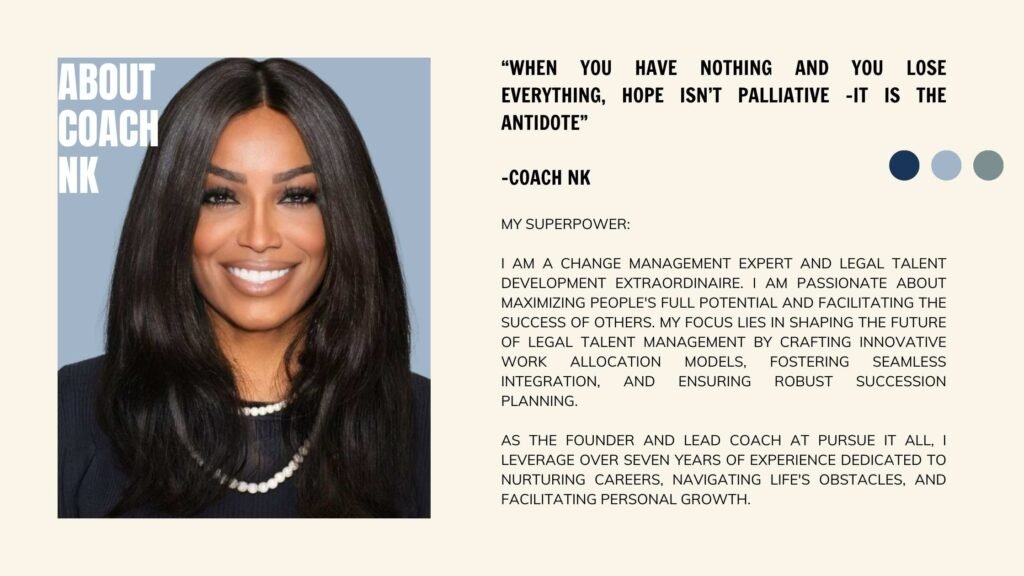
About Coach Nk

Coach Nk

Coach Nk helps high-achieving professionals conquer self-doubt and build unshakeable confidence to lead with impact.