Categories
Career Satisfaction Coaching

A Comprehensive Guide on How to Find the Right Life Coach

Life can feel like navigating a vast and sometimes turbulent ocean. We often encounter moments of uncertainty, transition, stagnation, or a yearning for something more. In these times, a life coach can act as a skilled navigator, helping you chart a course towards your goals, unlock your potential, and live a more fulfilling life. However, with the growing popularity of life coaching, finding the right life coach for your specific needs can feel like searching for a specific lighthouse in a sea of possibilities.

This comprehensive guide will illuminate the path, providing you with a step-by-step approach to finding a life coach who resonates with you, understands your aspirations, and empowers you to create meaningful change.

Phase 1: Defining Your Needs and Goals – Charting Your Course

Before you even begin your search, it’s crucial to gain clarity on what you hope to achieve through life coaching. This self-reflection will act as your compass, guiding you towards coaches who specialize in areas relevant to your aspirations.

1. Identify Your Areas of Focus

  • What specific areas of your life are you seeking to improve or change? Are you looking for support in your career, relationships, personal growth, health and wellness, finances, or spirituality?
  • What are the key challenges you are currently facing? Are you feeling stuck, overwhelmed, lacking direction, struggling with limiting beliefs, or navigating a significant life transition?
  • What are your desired outcomes? What do you hope to achieve through coaching? Be as specific as possible. Instead of “I want to be happier,” consider “I want to feel more joy and purpose in my daily life and develop stronger, more fulfilling relationships.”

2. Determine Your Coaching Style Preference

  • Do you prefer a more directive or non-directive approach? Some coaches offer more guidance and structure, while others focus on facilitating your own insights and solutions.
  • What kind of communication style resonates with you? Do you prefer a coach who is empathetic and supportive, challenging and direct, or a blend of both?
  • Do you have any preferences regarding the coach’s background or experience? Are you looking for someone with experience in a specific industry or niche?

3. Consider Your Budget and Time Commitment

  • How much are you willing and able to invest in coaching? Coaching fees can vary significantly based on the coach’s experience, specialization, and the duration and frequency of sessions.  
  • How much time can you realistically commit to coaching sessions and related exercises? Coaching requires active participation and dedication to see results.
  • Are you open to individual coaching, group coaching, or a combination of both? Group coaching can be more affordable and offer a sense of community.  

Phase 2: Research and Discovery – Exploring the Lighthouses

Once you have a clear understanding of your needs and preferences, it’s time to start exploring potential coaches.

4. Leverage Online Resources

  • Professional Coaching Organizations: Websites like the International Coaching Federation (ICF), the European Mentoring & Coaching Council (EMCC), and other reputable organizations often have searchable directories of credentialed coaches.  
  • Online Coaching Platforms: Platforms like BetterUp, Coach.me, and Noom offer access to a wide range of coaches with different specializations.  
  • LinkedIn: Search for life coaches based on their specialization, experience, and recommendations.
  • Google and other search engines: Use specific keywords related to your needs (e.g., “career coach for tech professionals,” “relationship coach for singles”).

5. Seek Recommendations and Referrals

  • Ask your network: Reach out to friends, family, colleagues, or therapists who might have worked with a life coach they recommend.
  • Look for testimonials and reviews: Read what past clients have to say about their experience with a particular coach. Pay attention to the specific outcomes they achieved.

6. Explore Different Coaching Specializations

  • Career Coaching: Focuses on career development, job transitions, and professional fulfillment.  
  • Relationship Coaching: Helps individuals improve their romantic relationships, family dynamics, or friendships.  
  • Personal Growth Coaching: Addresses self-discovery, confidence building, and overcoming limiting beliefs.  
  • Executive Coaching: Supports leaders and executives in enhancing their performance and leadership skills.  
  • Health and Wellness Coaching: Focuses on lifestyle changes related to fitness, nutrition, and well-being.
  • Financial Coaching: Helps individuals manage their finances, set financial goals, and build wealth.  

Phase 3: Evaluation and Connection – Finding the Right Fit

This is a critical phase of how to find a life coach online where you assess potential coaches to determine if they are the right fit for you.

7. Schedule Introductory Calls or Discovery Sessions

  • Most coaches offer a free initial consultation. This is an invaluable opportunity to learn more about their coaching style, ask questions, and see if you feel a connection.
  • Prepare a list of questions beforehand. Ask about their coaching philosophy, experience with clients facing similar challenges, their coaching process, fees, and session frequency.
  • Pay attention to your gut feeling. Do you feel comfortable and understood by the coach? Do you sense trust and rapport?

8. Evaluate Their Credentials and Experience

  • Check for certifications from reputable coaching organizations (e.g., ICF, EMCC). While not always mandatory, certifications demonstrate a commitment to professional standards and ethical practices.  
  • Inquire about their training and experience. How long have they been coaching? What kind of clients have they worked with?
  • Don’t be afraid to ask for references. Speaking with past clients can provide valuable insights into the coach’s effectiveness.

9. Assess Their Coaching Style and Approach

  • Did you feel heard and understood during the introductory call?
  • Did their communication style resonate with you?
  • Did they clearly explain their coaching process and what you can expect?
  • Do you feel challenged and inspired by their questions and insights?

Phase 4: Making Your Decision and Starting Your Journey – Setting Sail

After careful consideration, it’s time to make your decision and embark on your coaching journey.

10. Trust Your Intuition

Ultimately, the best coach for you is someone you feel a strong connection with and trust. Choose a coach who makes you feel safe, supported, and empowered.

11. Discuss Logistics and Expectations

  • Clarify the coaching agreement, including fees, session duration, cancellation policies, and communication methods.  
  • Set clear expectations for the coaching process and your role in it. Remember that coaching is a collaborative partnership.

12. Be Prepared to Commit and Engage

  • Coaching is an investment of time, energy, and resources. Be prepared to actively participate in sessions, complete assigned exercises, and be open to self-reflection and change.

The Journey Ahead

Finding the right life coach is a significant step towards personal growth and achieving your goals. By following this comprehensive guide, you can navigate the process with clarity and confidence, ultimately finding a partner who will empower you to navigate the complexities of life and steer your ship towards a brighter horizon. 

Remember that the connection you have with your coach is paramount, so trust your instincts and choose someone who truly resonates with you and your aspirations. Your journey to a more fulfilling life starts with this important choice.


Categories
Career Satisfaction Coaching

How to Find a Job You Love, That Pays You Well

The elusive “dream job” – a career that ignites your passion while also providing financial security – often feels like a mythical creature. We’re often told we have to choose: follow our hearts and risk financial instability, or chase a lucrative career that leaves us feeling unfulfilled. But what if you didn’t have to choose? What if you could find that sweet spot where passion and paycheck intersect?

The journey to finding a job you love that pays you well isn’t a quick fix, but it’s a deeply rewarding one. It requires introspection, strategic planning, and a willingness to step outside your comfort zone. 

Here’s a detailed guide to navigating this path and landing in a career that nourishes both your soul and your bank account:

Phase 1: Self-Discovery – Unearthing Your Passions and Skills

Before you even start looking at job boards, you need to embark on a journey of self-discovery. Understanding who you are, what truly motivates you, and what you’re good at is the bedrock of finding fulfilling and well-paying work.

1. Uncover Your Passions and Interests

  • Reflect on your “flow” moments: Think back to times when you were completely absorbed in an activity, losing track of time and feeling energized. What were you doing? What kind of tasks or projects genuinely excite you?
  • Explore your hobbies and curiosities: What do you do in your free time? What do you enjoy learning about? Even seemingly unrelated hobbies can reveal underlying interests and skills that could translate into a career.
  • Identify your values: What principles are most important to you in life and work? Do you value creativity, impact, autonomy, collaboration, helping others, continuous learning, or something else? Aligning your work with your values is crucial for long-term satisfaction.
  • Imagine your ideal workday: If you had complete freedom, what would your daily tasks look like? What kind of environment would you thrive in? Who would you be working with? Visualizing your ideal scenario can provide valuable clues.
  • Don’t dismiss “childhood dreams”: Sometimes, the passions we held as children still resonate deep within us. Revisit those early interests – is there a way to incorporate them into your professional life?

2. Identify Your Skills and Strengths

  • Create a comprehensive inventory: List all your skills – both hard skills (technical abilities, software proficiency, languages) and soft skills (communication, leadership, problem-solving, creativity, empathy). Don’t underestimate anything!
  • Reflect on your accomplishments: Think about projects and tasks where you excelled and received positive feedback. What skills did you utilize in those situations?
  • Seek feedback from others: Ask former colleagues, supervisors, mentors, and even friends and family about your strengths. Their perspectives can offer valuable insights you might have overlooked.
  • Analyze your education and experience: How have your academic pursuits and past work experiences equipped you with valuable skills and knowledge? Identify transferable skills that can be applied across different roles and industries.
  • Consider your natural talents: What comes easily to you? What are you naturally good at, even without formal training? These inherent abilities can be highly valuable in the right career.

Phase 2: Exploration and Research – Connecting Your Inner World to the Outer Job Market

Once you have a better understanding of yourself, it’s time to explore the vast landscape of career possibilities and identify those that align with your passions and skills, while also offering good earning potential.

3. Research Industries and Roles

  • Brainstorm potential career paths: Based on your self-discovery, start brainstorming different industries and roles that seem like a potential fit. Don’t limit yourself at this stage – explore widely.
  • Dive deep into specific roles: For each potential career path, research the day-to-day responsibilities, required skills, typical work environment, and potential for growth.
  • Investigate industry trends: Understand which industries are growing, which skills are in high demand, and what the future outlook looks like. This will help you identify opportunities with strong earning potential.
  • Explore unconventional paths: Don’t just focus on traditional job titles. Consider freelancing, consulting, entrepreneurship, or hybrid roles that might offer more flexibility and align with your interests.
  • Utilize online resources: Explore career websites, industry publications, professional associations, and LinkedIn to gather information and insights.

4. Understand the Compensation Landscape

  • Research salary expectations: For the roles and industries you’re interested in, research typical salary ranges based on experience, location, and company size. Websites like Glassdoor, Salary.com, and LinkedIn can provide valuable data.
  • Consider the “total compensation” package: Don’t just focus on the base salary. Factor in benefits like health insurance, retirement plans, paid time off, bonuses, stock options, and other perks.
  • Understand the factors influencing pay: Research how factors like education, specialized skills, certifications, and years of experience impact earning potential in your target fields.
  • Identify skills that command higher salaries: Are there specific skills or certifications within your areas of interest that are known to lead to higher pay? Consider investing in developing these skills for doing a job you love.

5. Network and Seek Informational Interviews

  • Reach out to people in your target fields: Connect with professionals working in roles that interest you on LinkedIn or through personal connections.
  • Request informational interviews: Ask if they’d be willing to chat briefly about their career path, their experiences, and the realities of their job. This is invaluable for gaining insider knowledge and insights.
  • Prepare thoughtful questions: Go beyond basic job descriptions. Ask about the challenges, the rewards, the required skills, and the career trajectory within their field.
  • Build genuine connections: Networking isn’t just about getting a job; it’s about building relationships. Be genuinely interested in people’s stories and experiences.

Phase 3: Strategic Action – Bridging the Gap and Making Your Move

Once you have a clearer picture of your ideal career path and the realities of the job market, it’s time to take strategic action to bridge the gap between where you are now and where you want to be.

6. Identify Skill Gaps and Invest in Development

  • Compare your skills to job requirements: While you’re finding a job you love, analyze job descriptions for roles that interest you and identify any skills or qualifications you currently lack.
  • Develop a learning plan: Create a plan to acquire the necessary skills through online courses, workshops, certifications, further education, or even volunteer work.
  • Highlight transferable skills: Even if you don’t have direct experience in a specific role, focus on showcasing your transferable skills and how they can be applied to the new position.
  • Consider internships or entry-level positions: Sometimes, you need to take a step sideways or even slightly backward to gain the necessary experience in a new field. Be open to opportunities that might not be your “dream job” immediately but can serve as a stepping stone.

7. Craft a Compelling Resume and Cover Letter

  • Tailor your application materials: Don’t use a generic resume and cover letter. Customize them for each specific job you apply for, highlighting the skills and experiences that are most relevant to the role.
  • Quantify your achievements: Instead of just listing your responsibilities, showcase your accomplishments with numbers and data whenever possible. For example, “Increased sales by 15% in one year.”
  • Showcase your passion and alignment: In your cover letter, clearly articulate why you’re interested in the specific role and company, and how your passions and values align with their mission.
  • Proofread meticulously: Errors in your application materials can create a negative impression and might not help you positively to find work you love. Ensure everything is polished and error-free.

8. Ace the Interview Process

  • Research the company thoroughly: Understand their mission, values, products/services, and recent news.
  • Prepare for common interview questions: Practice your answers to questions about your strengths, weaknesses, experience, and career goals.
  • Use the STAR method: When describing your experiences, use the STAR method (Situation, Task, Action, Result) to provide clear and concise examples.
  • Ask insightful questions: Prepare thoughtful questions to ask the interviewer. This shows your engagement and genuine interest.
  • Follow up professionally: Send a thank-you email after the interview, reiterating your interest and highlighting key takeaways from the conversation.

9. Negotiate Your Salary and Benefits

  • Know your worth: Based on your research and experience, have a clear understanding of the salary range you’re aiming for.
  • Be confident and assertive: Don’t be afraid to negotiate. Many employers expect some level of negotiation.
  • Focus on the total compensation package: Remember to consider benefits beyond just the base salary.
  • Practice your negotiation skills: Prepare your arguments and be ready to articulate your value to the company.
  • Know when to walk away: If the offer doesn’t meet your financial needs or align with your values, be prepared to politely decline.

10. Embrace Continuous Learning and Adaptation

  • The job market is constantly evolving: Be committed to lifelong learning and staying updated on industry trends and new skills.
  • Seek feedback and be open to growth: Regularly seek feedback from your supervisors and colleagues and be willing to adapt and improve.
  • Don’t be afraid to pivot: Your passions and interests may evolve over time. Be open to exploring new opportunities and making career changes if your current path no longer aligns with your goals.

Finding a job you love that pays you well is a journey, not a destination. It requires self-reflection, diligent research, strategic action, and a willingness to adapt. By following these steps and staying true to your values and aspirations, you can significantly increase your chances of landing in that sweet spot where passion and prosperity intertwine, leading to a truly fulfilling and rewarding career.

Categories
Career Satisfaction Coaching

How Career Coaching Can Help You Achieve Your Goals

Charting Your Course to Success

In today’s dynamic and often complex professional landscape, navigating your career path can feel like traversing uncharted territory. Whether you’re a recent graduate just starting, a seasoned professional contemplating a career change, or someone aiming for that next big promotion, the journey can be fraught with uncertainty, self-doubt, and a lack of clear direction. This is where a career coach’s invaluable support and guidance can make all the difference, acting as your strategic partner in achieving your career goals.

Career coaching is a focused and collaborative process designed to empower individuals to define, strategize, and ultimately produce professional aspirations. Unlike general life coaching, career coaching benefits specifically address career-related challenges and opportunities, providing tailored tools, insights, and accountability to help you move forward with confidence and purpose.

The Landscape of Career Challenges

Before diving into career coaching benefits, it’s important to acknowledge the common hurdles individuals face in their professional lives:

  • Lack of Clarity: Many struggle to identify their true passions, values, and ideal career paths. They might feel stuck in a role that doesn’t align with their strengths or long-term vision.
  • Job Search Frustration: The job market can be competitive and overwhelming. Individuals may face challenges crafting effective resumes and cover letters, networking effectively, or interviewing.
  • Career Transition Difficulties: Switching careers, whether by choice or necessity, can be daunting. Individuals may lack the skills, experience, or confidence to transition successfully.
  • Feeling Stuck or Unfulfilled: Even in seemingly successful careers, individuals can experience a sense of stagnation, lack of purpose, or dissatisfaction.
  • Navigating Workplace Politics: Understanding and navigating the complexities of workplace dynamics and relationships can be challenging for many.
  • Lack of Confidence and Self-Doubt: Limiting beliefs and a lack of self-assurance can prevent individuals from pursuing ambitious goals or advocating for themselves.
  • Salary Negotiation Challenges: Many people feel uncomfortable or ill-equipped to negotiate their salary and benefits effectively.
  • Leadership and Management Skill Gaps: As individuals progress in their careers, they may need to develop new leadership and management skills to excel in their roles.

What is Career Coaching?

A career coach is a trained professional who works with you in a structured and supportive environment to address these challenges and help you achieve your career goals. They are not there to tell you what to do but to guide you through self-discovery, strategic planning, and action-taking. Think of them as your career strategist, accountability partner, and biggest advocate.

How does Career Coaching help Achieve Goals?

Career coaching employs various techniques and approaches tailored to your needs and aspirations. Here’s a detailed look at career coaching benefits:

1. Gaining Clarity on Your Career Direction:

  • Identifying Values, Interests, Skills, and Passions: A coach will use assessments, discussions, and reflective exercises to help you uncover your core values, identify your genuine interests, and recognize your unique skills and talents. This foundational understanding is crucial for aligning your career with what motivates and fulfills you.
  • Exploring Career Options: If you’re feeling lost or considering a career change, a coach can help you explore different career paths that align with your identified values, interests, and skills. They can provide insights into various industries, roles, and required qualifications.
  • Defining Your Ideal Career Vision: Together, you’ll work on creating a clear and compelling vision of your ideal career. This involves envisioning your desired role, work environment, impact, and overall professional life.

2. Setting Specific and Achievable Career Goals:

  • Utilizing Goal-Setting Frameworks: Coaches often utilize frameworks like SMART (Specific, Measurable, Achievable, Relevant, Time-bound) goals to help you define clear and actionable objectives. This ensures that your goals are well-defined and you have a roadmap.
  • Prioritizing Goals: You might have multiple career aspirations. A coach can help you prioritize these goals based on your values, timelines, and feasibility, ensuring you focus your energy effectively.
  • Breaking Down Large Goals into Smaller Steps: Overwhelming goals can feel paralyzing. A coach will help you break down your larger aspirations into smaller, manageable steps, making the journey less daunting and more achievable.

3. Developing a Strategic Career Plan:

  • Identifying Necessary Skills and Knowledge: Once your goals are clear, a coach will help you identify any skills or knowledge gaps that need to be addressed. This might involve suggesting relevant training, courses, certifications, or networking opportunities.
  • Creating an Actionable Roadmap: Based on your goals and identified needs, you’ll work with your coach to develop a step-by-step plan outlining the specific actions you need to take, along with timelines and resources.
  • Developing Networking Strategies: Building a strong professional network is crucial for career advancement. A coach can help you identify networking opportunities, develop effective communication strategies, and build meaningful connections.

4. Mastering Job Search Strategies:

  • Crafting Compelling Resumes and Cover Letters: A coach can provide expert guidance on creating impactful resumes and cover letters that highlight your skills and experience in a way that resonates with potential employers.
  • Improving Interview Skills: Through mock interviews and personalized feedback, a coach can help you hone your interviewing skills, build confidence, and effectively communicate your value to prospective employers.
  • Leveraging Online Job Boards and Platforms: A coach can guide you on effectively utilizing online job boards, professional networking platforms like LinkedIn, and other resources to find relevant job opportunities.
  • Understanding the Hidden Job Market: Coaches often have insights into the “hidden job market” and can help you explore opportunities only avaialble in specific networks. 

5. Negotiating Salary and Benefits:

  • Researching Salary Benchmarks: A coach can help you research industry-standard salary ranges for your desired roles and experience level, empowering you with valuable information for negotiations.
  • Developing Negotiation Strategies: They can guide salary and benefits negotiations confidently and assertively, ensuring you are fairly compensated for your skills and experience.
  • Practicing Negotiation Techniques: Through role-playing and feedback, a coach can help you practice your negotiation skills, making you feel more comfortable and prepared during real-life scenarios.

6. Navigating Career Transitions:

  • Identifying Transferable Skills: If you’re considering a career change, a coach can help you determine your transferable skills and how they can be applied to new industries or roles.
  • Developing a Transition Plan: They can assist you in creating a strategic plan for transitioning into your desired field, which might involve further education, volunteering, or taking on entry-level roles.
  • Addressing Fear and Uncertainty: Career transitions can be emotionally challenging. A coach can provide support and guidance to help you navigate the fear and uncertainty of making a significant career shift.

7. Developing Leadership Skills:

  • Identifying Leadership Strengths and Weaknesses: For those aspiring to leadership roles or looking to enhance their existing leadership skills, a coach can help identify your strengths and areas for development.
  • Developing Effective Communication and Interpersonal Skills: Strong leadership relies on effective communication and interpersonal skills. A coach can provide strategies and techniques to improve these crucial areas.
  • Building Confidence in Leadership Abilities: Through coaching, you can develop greater self-awareness and confidence in your leadership capabilities, enabling you to lead and inspire others effectively.

8. Improving Work-Life Balance:

  • Identifying Sources of Stress and Burnout: A coach can help you determine the factors contributing to stress and burnout in your career and develop strategies to manage them effectively.
  • Setting Boundaries and Prioritizing Well-being: They can guide you in setting healthy boundaries between your work and personal life and prioritizing your overall well-being.
  • Developing Time Management and Productivity Techniques: Effective time management and productivity strategies can help you achieve your career goals without sacrificing your personal life.

9. Building Confidence and Overcoming Self-Doubt:

  • Identifying and Challenging Limiting Beliefs: A coach can help you recognize and challenge the negative self-talk and limiting beliefs that might be hindering your career progress.
  • Focusing on Strengths and Achievements: They will help you recognize and celebrate your accomplishments and focus on your inherent strengths, building your self-esteem and confidence.
  • Developing a Growth Mindset: Coaching encourages a growth mindset, helping you view challenges as opportunities for learning and development rather than insurmountable obstacles.

10. Providing Accountability and Support:

  • Regular Check-ins and Progress Monitoring: Your coach will schedule regular sessions with you t your progress, address any challenges, and keep you accountable to your action plan.
  • Unbiased Feedback and Encouragement: A coach provides objective feedback and unwavering support throughout your career journey, helping you stay motivated and on track.
  • A Safe and Confidential Space for Exploration: Coaching sessions offer a safe and confidential space to explore your thoughts, fears, and aspirations without judgment.

Who Can Benefit from Career Coaching?

The career coaching benefits extend to individuals at various stages of their professional lives:

  • Students and Recent Graduates: Gaining clarity on career paths, developing job search skills, and making informed decisions about their future.
  • Early-Career Professionals: Navigating their first few roles, developing foundational skills, and setting themselves up for long-term success.
  • Mid-Career Professionals: Considering a career change, seeking promotion, or feeling stuck and seeking purpose.
  • Executives and Senior Leaders: Enhancing leadership skills, navigating complex organizational challenges, and planning their next career move.
  • Individuals Facing Job Loss or Career Transition: Providing support, guidance, and practical strategies for finding new employment or exploring different career options.
  • Anyone Seeking Greater Fulfillment and Purpose in Their Work: Helping individuals align their career with their values and passions.

Choosing the Right Career Coach

Selecting a career coach who is the right fit for you is crucial for a successful coaching experience. Consider the following factors to avail all the benefits of career coaching:

  • Their Expertise and Experience: Look for a coach who has experience working with individuals in your industry or facing similar career challenges.
  • Their Coaching Style: Different coaches have different approaches. Find someone whose style resonates with you and makes you feel comfortable and supported.
  • Their Credentials and Certifications: While not always mandatory, certifications from reputable coaching organizations can indicate a certain level of training and professionalism.
  • Testimonials and References: Read testimonials or ask for references to understand other clients’ experiences with the coach.
  • Chemistry and Connection: Schedule an initial consultation to see if you have a good rapport and connection with the coach. Trust and open communication are essential for a successful coaching relationship.

The ROI of Career Coaching

While career coaching involves an investment of time and money, one of the benefits of professional coaching is that the potential return on investment can be significant. This can include:

  • Increased Salary and Earning Potential: Effective negotiation skills and strategic career moves can lead to higher compensation.
  • Greater Job Satisfaction and Fulfillment: Aligning your career with your values and passions can lead to a more rewarding and fulfilling professional life.
  • Faster Career Progression: Clear goals and strategic planning can accelerate your career advancement.
  • Reduced Stress and Burnout: Improved work-life balance and a sense of control over your career can lead to rereduce
  • Enhanced Confidence and Self-Esteem. Achieving your career goals and overcoming challenges can significantly boost your confidence.

Conclusion

In conclusion, career coaching is a powerful tool that can significantly enhance your ability to achieve your professional goals. A career coach catalyzes your career success by providing clarity, strategic guidance, skill development, and unwavering support. 

Whether you’re looking to find your ideal career path, land your dream job, navigate a career transition, or reach new heights in your current field, investing in career coaching can be the most impactful step you take towards charting your course to a fulfilling and successful professional future. It’s about taking proactive control of your career journey and unlocking your full potential in the world of work.

Categories
Career Satisfaction Coaching

What Is Career Coaching And How Does It Boost Your Success?

As a career coach, I have seen firsthand the transformative power of guidance and support in navigating the professional world. Many individuals find themselves at a crossroads in their careers, unsure of their next steps or feeling stuck in unfulfilling roles. This is where the expertise of a career coach can make a significant difference. 

This article will delve into the world of career coaching, exploring what career coaching is, what a career coach does, what a career coach can help with, who can benefit from a career coach, and how it can be the key to unlocking your career potential.

First, let’s start with some situations where a career coach will prove to be your clarity catalyst. 

Feeling Lost and Unsure of Your Career Path?

One of the most common pain points I hear from clients is a sense of being lost or directionless in their careers. You might be asking yourself: Am I on the right path? Is this the career I’m truly meant for? These feelings of uncertainty are completely normal, especially in today’s rapidly changing job market. 

What is career coaching’s role in this situation? What can a career coach help with here? 

A career coach can help you gain clarity, identify your passions and values, and explore career options that align with your authentic self. We will work together to uncover your unique skills and talents and develop a roadmap for achieving your career aspirations.

Stuck in a Job You Dislike?

Another frequent concern is feeling trapped in a job that doesn’t bring joy or fulfillment. You might be experiencing burnout, feeling undervalued, or simply bored with your work. This can lead to decreased motivation, reduced productivity, and a general sense of dissatisfaction. 

What is professional coaching’s approach to this issue?

A career coach can help you assess your current situation, identify what’s not working, and explore alternative career paths that better match your interests and values. We will work on strategies for either improving your current role or making a strategic transition to a more fulfilling career.

Facing Challenges in Your Job Search?

The job search process can be daunting, especially if you’re not sure where to start or how to market yourself effectively. You might struggle to write a compelling resume and cover letter, feel nervous about interviews, or simply not get any responses to your applications. 

What is career coaching’s contribution to a successful job search? What is a certified professional coach’s role in such a situation?

A career coach can provide expert guidance and support throughout the entire job search process. We will work on crafting a powerful resume and cover letter that highlight your skills and accomplishments, practice your interviewing skills, and develop a targeted job search strategy.

Wanting to Advance Your Career But Not Sure How?

Perhaps you’re happy in your current role but feel ready to take the next step in your career. You might be aiming for a promotion, seeking new challenges, or wanting to develop your leadership skills. However, you might be unsure of how to position yourself for advancement or what skills you need to develop. 

What is career coaching’s role in career advancement? 

A certified professional coach can help you identify your career goals, assess your current skillset, and develop a plan for acquiring the necessary skills and experience to reach your desired level. We can also work on strategies for networking, building relationships, and advocating for yourself within your organization.

Lacking Confidence in Your Abilities?

Self-doubt can be a major obstacle to career success. You might underestimate your skills and abilities, feel like an imposter, or be afraid of taking risks. This lack of confidence can hold you back from pursuing opportunities and reaching your full potential. 

What is career coaching’s approach to building confidence? 

A career coach can help you identify and challenge your limiting beliefs, recognize your strengths and accomplishments, and develop a stronger sense of self-worth. We will work on building your confidence so you can present yourself effectively and pursue your career goals with conviction.

Seeking Work-Life Balance?

In today’s always-on culture, achieving work-life balance can feel like an impossible dream. You might be working long hours, feeling overwhelmed by your responsibilities, and struggling to find time for your personal life. This can lead to burnout, stress, and a decline in overall well-being. 

What can a career coach help with when it comes to work-life balance? 

A professional career coach can help you assess your current work-life balance, identify areas for improvement, and develop strategies for creating a more sustainable and fulfilling lifestyle. We’ll work on time management skills, setting boundaries, and prioritizing your well-being.

What is Career Coaching, Exactly?

Now that we’ve explored some essential ways explaining what a career coach does, let’s define what is career coaching more formally. Career coaching is a professional partnership designed to support individuals in all stages of their career journey. 

It’s a collaborative process that involves self-assessment, goal setting, strategy development, and ongoing support. A certified professional career coach acts as a guide, mentor, and advocate, helping you navigate the complexities of the job market and achieve your career aspirations.

What to Expect From Career Coaching

Finding out what to get from a career coaching can be confusing. A typical career coaching engagement involves several key stages:

  • Initial Consultation: This is an opportunity for us to connect, discuss your career goals and challenges, and determine if we’re a good fit to work together.
  • Self-Assessment: We’ll delve into your values, interests, skills, and experiences to gain a clear understanding of your strengths and what you’re looking for in a career.
  • Goal Setting: Together, we’ll define specific, measurable, achievable, relevant, and time-bound (SMART) goals for your career development.
  • Strategy Development: We’ll create a personalized plan of action, outlining the steps you need to take to achieve your goals. This might include resume and cover letter writing, interview preparation, networking strategies, and job search techniques.
  • Ongoing Support: I’ll provide ongoing support, guidance, and encouragement as you implement your plan and navigate the challenges of your career journey.

What Makes a Good Career Coach?

What makes a good career coach is a crucial question to ask. Choosing the right career coach is essential for a successful coaching experience. Look for a coach who:

  • Has relevant experience and expertise: A good career coach has a strong understanding of the job market and experience working with clients from diverse backgrounds.
  • Is a skilled communicator and active listener: Effective communication is essential for building rapport, understanding your needs, and providing constructive feedback.
  • Is empathetic and supportive: A good coach creates a safe and non-judgmental space for you to explore your challenges and vulnerabilities.
  • Is results-oriented: A good coach is focused on helping you achieve your career goals and will provide you with the tools and resources you need to succeed.

Ready to Pursue It All?

At Pursue It All, we’re dedicated to helping you achieve your career aspirations. We offer personalized career coaching programs designed to empower you to take control of your career and create a future you love.

Here’s how you can take the next step:

  • Schedule a complimentary consultation: Let’s discuss your goals and challenges, and how our career coaching services can help you achieve them. This is a no-pressure opportunity to explore if coaching is the right fit for you. Book a Consultation
  • Explore our career coaching programs: Learn more about our tailored programs designed to address specific career needs and goals. 
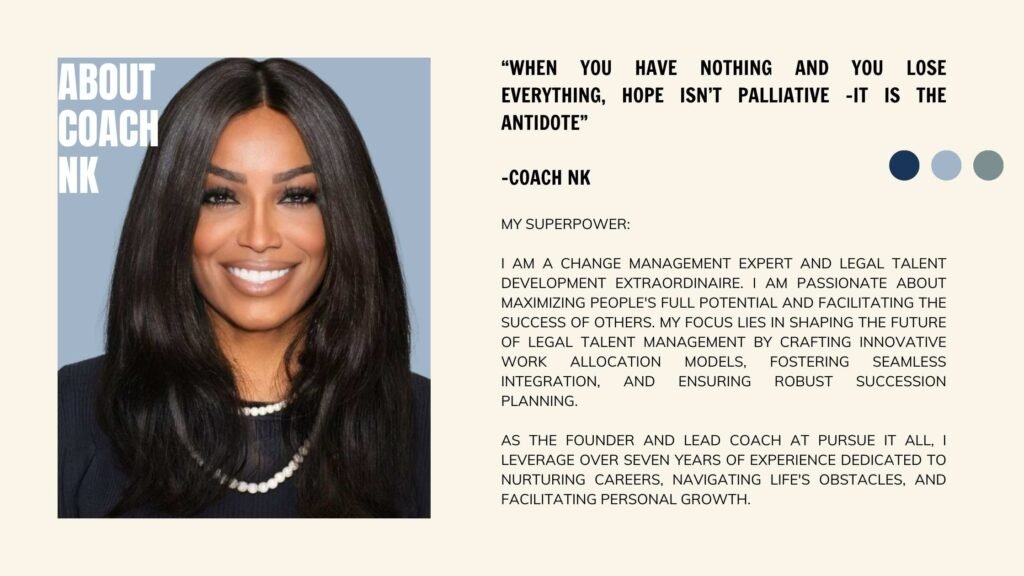
  • Meet our coach: Get to know our experienced and dedicated coach, Nk. Read her bio and learn about her expertise. Meet Our Coach

Contact us directly: Do you have questions? We’re here to help. Contact us via phone or email, and we’ll be happy to answer your inquiries.


Success Stories

“After working with Coach Nk, I transformed my mindset and embraced leadership. I went from hesitation to confidently leading high-stakes projects.” — J. Stevens, CEO

Transform Your Mindset Today

Don’t let limiting beliefs hold you back. Take our quiz or book a consultation now to unlock the success you deserve.

About Coach Nk

Coach Nk

Coach Nk helps high-achieving professionals conquer self-doubt and build unshakeable confidence to lead with impact.


Categories
Career Satisfaction Coaching

3 Warning Signs Your Career is Misaligned with Your Purpose—and How to Find True Fulfillment

Have you ever felt that your career is moving forward, but something feels off? You’ve hit the milestones, received promotions, maybe even a pay raise—but you still feel unfulfilled. You’re not alone. Many successful professionals experience this disconnect, often because their career isn’t aligned with their deeper sense of purpose.

Purpose isn’t just about passion or what you’re good at; it’s about the values and impact that truly drive you. When your career and purpose aren’t in sync, even success can feel hollow. In this article, we will explore three key signs that your career isn’t aligning with your purpose and how you can start changing course for long-term fulfillment.

Sign 1: Chronic Dissatisfaction Despite Success

You’ve Achieved, But You’re Unhappy
From the outside, it seems like you have it all—recognition, leadership, and tangible success. But internally, something’s missing. This feeling of dissatisfaction can appear even when you’re ticking all the right boxes. If you find yourself feeling constantly drained or indifferent about your job, it may be a signal that your work isn’t aligned with your deeper values or sense of purpose.

Why This Happens
Many professionals follow a path of expected achievement—climbing the corporate ladder, hitting performance targets, and securing prestigious roles. However, if these goals aren’t rooted in personal purpose, they can lead to burnout and a growing sense of disconnect. The work you’re doing may no longer feel meaningful, and this misalignment can make even success feel unsatisfying.

How to Recognize It

  • Do you feel a sense of dread on Sunday nights, knowing the workweek is coming?
  • Are you questioning the why behind what you do, or feeling like your role is pointless?
  • Do accomplishments that used to excite you now feel like obligations?

If you find yourself nodding to these questions, your career might be lacking alignment with your core purpose.

Sign 2: Lack of Motivation and Engagement

Work Feels Like a Chore
Remember the early days of your career when you were excited to take on new projects, face challenges, and innovate? If that fire has dimmed and you are now just going through the motions, it’s a very clear indicator that something is off. When your career is disconnected from your purpose, staying engaged becomes a struggle, and tasks that used to energize you now feel monotonous and draining.

Why This Happens
Purpose is a natural motivator. When you’re doing work that resonates with your values and desires, you’re not only more productive but also more passionate about your role. On the other hand, when your career lacks purpose, it can feel like you’re just fulfilling obligations. Over time, this lack of engagement can lead to decreased productivity and feelings of stagnation.

How to Recognize It

  • Do you find yourself procrastinating more often or feeling uninspired by projects?
  • Are you simply “punching the clock” and counting down the hours?
  • Have you lost interest in seeking professional growth or taking on new challenges?

This decline in motivation isn’t about laziness—it’s about a lack of purpose-driven work. When your role is aligned with what you truly value, engagement follows naturally.

Sign 3: Emotional Burnout Without Clear Cause

Burnout Without Overwork
Many professionals associate burnout with long hours and high stress, but emotional burnout can happen even when you aren’t overworked. If you feel emotionally exhausted or disconnected from your career without a clear reason, it may be because your work no longer aligns with who you are. You may feel drained because the tasks you’re performing don’t match your deeper goals or vision.

Why This Happens
Burnout often stems from spending too much energy on things that don’t bring joy or fulfillment. When your career lacks purpose, you expend emotional energy trying to stay motivated, compensating for the lack of alignment. Over time, this constant disconnect wears you down, leading to emotional burnout—even if your workload isn’t unusually heavy.

How to Recognize It

  • Do you feel emotionally detached or cynical about your work, despite once being passionate?
  • Are you experiencing physical fatigue or stress without an increase in job demands?
  • Do you feel like you’re giving too much to something that doesn’t give back?

This kind of burnout often results from being out of touch with your purpose. It signals that your energy is being spent in ways that don’t resonate with your deeper values, leaving you emotionally drained.

How to Realign Your Career with Your Purpose

If any of these signs sound familiar, you’re likely facing a disconnect between your career and your purpose. Realigning your career can reignite motivation, enhance fulfillment, and achieve sustainable long-term success. Here’s how to start:

  1. Reflect on What Energizes You
    Remember the moments in your career when you felt most energized, passionate, or fulfilled. What were you doing? Who were you impacting? Understanding what energizes you can provide insights into your purpose.
  2. Identify Your Core Values
    What values are non-negotiable in your life and work? whether it’s creativity, integrity, collaboration, or making an impact., Knowing your values will help you identify your purpose and realign your career with it, 
  3. Redefine Your Role
    Once you’ve identified your purpose, look at your current role through a new lens. Can you make small shifts in your responsibilities or approach to better align with your purpose? If not, it might be time to explore new opportunities.

Take the First Step to Career Fulfillment

Your career should reflect your values and purpose, not just a series of achievements. When it aligns with your purpose, work becomes fulfilling, success feels meaningful, and long-term satisfaction is within reach.

Find Your Purpose
If you’re ready to discover how to align your career with your purpose, take our What’s Holding You Back? A quiz to identify where you may be stuck and get personalized insights to help you realign.


Book a Free Consultation
Feeling ready to explore your path to long-term fulfillment? Schedule a complimentary consultation with Pursue It All and start making the shift to a purpose-driven career today.


Categories
Career Satisfaction Coaching Confidence

The Ultimate Guide to Negotiating Post-Interview Offers Like a Pro

You’ve aced the interview and received the offer, and now it’s time for the next critical step—negotiating.But many executives, even at the highest levels, leave money and benefits on the table simply because they don’t know how to negotiate effectively.

Negotiation is not just about salary—it’s about ensuring your entire compensation package reflects your value and positions you for long-term success. Yet, professionals often approach this phase with uncertainty or hesitation, either out of fear of losing the offer or simply not knowing how to navigate these conversations.

This guide will walk you through the steps to negotiate like an executive, ensuring you secure the best possible package and start your new role on solid ground.

The Executive Mindset: Treat Negotiation as a Strategic Discussion

Shift Your Perspective: Negotiation is Collaboration

  • Successful negotiation isn’t about confrontation—it’s a strategic conversation between two parties. As an executive, your role is to create a win-win outcome where you and the company are invested in your success.
  • Key Tip: Approach the discussion confidently, understanding that the employer expects negotiation and respects candidates who advocate for themselves.

Understand Your Leverage

  • Employers know your value—that’s why they made you the offer. Your unique skills, experience, and fit for the role give you leverage. It’s not just about what you’ve done in the past but what you can bring to the company’s future.
  • Key Tip: Before entering the negotiation, clearly define your value and how it aligns with the company’s goals. Leverage this to justify your asks.

Preparing for the Negotiation: Do Your Homework

Research Compensation Benchmarks

  • Salary is just one part of the package, and knowing industry standards for your role in your region and sector is key. Research salaries, bonuses, equity options, and other benefits that executives at your level typically receive.
  • Key Tip: Use resources like salary benchmarking tools, industry reports, or even confidential conversations with recruiters to gather data on what is reasonable to request.

Know What Matters Most to You

    • It’s not just about the salary. Consider other elements like stock options, signing bonuses, performance bonuses, vacation time, flexible working arrangements, and professional development opportunities.
    • Key Tip: List your top priorities before the negotiation and clarify what you’re willing to compromise on. This helps you stay focused on your objectives.

Prepare Your Justifications

  • Once you have your priorities, prepare clear justifications for each one. Why is a higher salary justified based on your experience? How will additional vacation time benefit both you and the company?
  • Key Tip: Tie each request to the value you bring. For instance, “Given my track record in driving revenue growth by 20% in my previous role, I’m confident I can deliver significant results here, and I believe a higher base salary reflects this potential.”

Executing the Negotiation: Timing, Tactics, and Tone

  1. Timing is Key
  • It’s essential to start the negotiation process only after you’ve received a formal offer. This gives you the clearest picture of what’s on the table and allows you to counter strategically.
  • Key Tip: Key Tip: Don’t rush to accept the first offer, but don’t delay too long. Acknowledge the offer, express enthusiasm, and ask for time to review it in detail before initiating the negotiation.

Tactics for an Effective Negotiation

  • Start with Gratitude: Open by thanking the employer for the offer and expressing excitement about the opportunity. This sets a collaborative tone.
  • State Your Requests Confidently: When making your counteroffer, be specific and direct. Avoid being vague with phrases like, “Is there room to negotiate?” Instead, say, “Based on my experience and the value I bring, I would like to discuss increasing the base salary to $X.”
  • Ask Open-Ended Questions: Rather than framing requests as ultimatums, ask questions like, “What flexibility is there on the signing bonus?” or “Could we explore additional stock options?” This encourages dialogue and opens the door for creative solutions.

Tone and Delivery Matter

  • Negotiating is as much about how you present your requests as it is about what you’re asking for. Maintain a professional, respectful tone, and aim for a constructive conversation.
  • Key Tip: Practice active listening. If the employer raises concerns or counters your request, show you’re open to collaboration. For example, “I understand the budget constraints you mentioned. Is there another way we can meet in the middle, perhaps with a performance bonus or stock options?”

The Total Package: Look Beyond Salary

Evaluate Non-Monetary Benefits

  • Salary may be the headline figure, but non-monetary benefits often have long-term value. These include stock options, retirement contributions, wellness benefits, flexible work arrangements, and continued education stipends.
  • Key Tip: When evaluating these perks, consider your personal and professional goals . For instance, if you value work-life balance, additional vacation days or remote working options might outweigh a modest salary increase.

Negotiate for Long-Term Success

  • Beyond immediate compensation, consider elements that can benefit your long-term career growth, like executive coaching, leadership development opportunities, and pathways to further promotions.
  • Key Tip: Ask questions like, “What opportunities for leadership development and growth does the company offer?” This shows you’re thinking strategically about your future with the organization.

Mistakes to Avoid During Negotiation

Accepting the First Offer Without Discussion

  • Even if the offer looks excellent, never accept it outright without at least reviewing it and asking questions. Companies expect negotiation you may miss out on additional benefits by accepting too quickly

Focusing Only on Salary

  • Salary is important, but focusing solely on it can lead to overlooking other valuable elements of your package. Keep a broader view and assess all parts of the offer.

Using Threats or Ultimatums

  • Avoid issuing ultimatums like, “If you don’t meet this request, I will walk.” This can create tension and damage the relationship before you’ve even started.

Start Your New Role from a Position of Strength

Negotiating a post-interview offer is your opportunity to set the tone for your new role. By advocating for yourself and ensuring the package aligns with your values and career goals, you start from a position of strength, confidence, and clarity.

Ready to take control of your next career move?

At Pursue It All, we offer tailored coaching services o help you master the art of negotiation, ensuring your offers reflect your worth. Whether you’re negotiating salary, benefits, or professional growth opportunities, we provide you with the tools to succeed. Not sure where to start? Take our quiz now.


You don’t have to navigate this alone.

Book a Free Consultation:
Looking for personalized advice on navigating your next offer? Schedule a complimentary consultation with one of our executive coaches today and learn how you can secure the compensation package you deserve.


Categories
Career Satisfaction Coaching Confidence Mindset

Crush the Confidence Trap: How Top Executives Beat Inner Self-Doubt

Despite years of accomplishments, why do so many high-achieving executives still experience crippling self-doubt? Even at the top, feelings of inadequacy can persist. Let me show you how to overcome those feelings.

Even the most successful executives sometimes wonder, “Am I really good enough?” You’ve built a stellar career, made critical decisions, and achieved impressive milestones, yet feelings of self-doubt persist. And you’re not alone. Many executives experience this internal battle, despite having all the external success indicators.

This phenomenon is called the confidence gap—the space between your real capabilities and how capable you feel. The higher you climb, the more responsibility you take on; for many, the more self-doubt creeps in. Executives across industries face this gap, and it can lead to hesitation, fear of failure, and even missed opportunities.

But why does this gap exist? More importantly, how can you close it and regain your confidence to lead effectively? Let’s explore the causes of the confidence gap and provide actionable strategies to help you close it, once and for all.

What is the Confidence Gap?

The confidence gap is the disparity between your actual abilities and your belief in those abilities. It’s when you’re more than capable of excelling in your role but still feel like you’re falling short or aren’t equipped to handle challenges. This gap often stems from internalized self-doubt or limiting beliefs, even in those with a proven track record.

Examples of the Confidence Gap:

  • Second-Guessing Decisions: You’ve made countless high-stakes decisions, yet you constantly question your judgment, fearing you’ve missed something or made the wrong call.
  • Imposter Syndrome: Despite being at the top of your field, you feel like a fraud, as though your success is due to luck or external factors, not your skills.
  • Fear of Risk: You hesitate to take bold actions, afraid of failure or the consequences of a wrong move, even when your instincts tell you to proceed.

Impact of the Confidence Gap:

  • Limits Career Growth: Self-doubt leads to hesitancy, causing you to pass up high-impact opportunities or avoid pushing boundaries.
  • Increases Stress and Overwork: To “prove” yourself, you overwork to compensate for a perceived lack of competence, often leading to burnout.
  • Reduces Leadership Effectiveness: Confidence is key in leadership, and when you don’t fully trust yourself, it can erode your team’s trust and create uncertainty in decision-making.

So Why Do Smart, Successful Executives Still Struggle with Self-Doubt?

High Expectations:
Executives often set exceptionally high standards for themselves, which can foster feelings of inadequacy. When you expect perfection or immediate mastery, any minor setback or perceived failure becomes magnified, making you question your competence. The pressure to maintain or exceed your past success can fuel self-doubt, especially in rapidly changing or high-pressure environments.

Imposter Syndrome:
Imposter syndrome is a pervasive issue for many high- achievers. Despite external success, you may attribute your accomplishments to luck, timing, or being in the right place at the right time. This mindset keeps you from fully owning your expertise and often results in constant fear of being “exposed” as a fraud.

Fear of Failure:
As you rise up through the ranks, the stakes get higher. Every decision you make has far-reaching consequences for your career and your entire team or company. This increased responsibility can amplify the fear of failure. You may begin to question your instincts or avoid taking necessary risks, worried about the potential fallout.

The Cost of the Confidence Gap

Missed Opportunities:
Executives who lack confidence may shy away from pursuing ambitious goals or high-risk, high-reward opportunities , which can limit their personal and professional growth.

Overworking:
In an effort to compensate for self-doubt, executives may overwork, leading to burnout. They try to prove their worth through sheer effort, rather than trusting in their existing abilities.

Limited Leadership Impact:
Confidence is key to leadership. When executives second-guess themselves, it can trickle down to their teams, creating a culture of uncertainty and indecision.

How Confidence Coaching Can Close the Gap

Rebuilding Self-Belief:
Confidence coaching focuses on helping you internalize your success. Rather than attributing your achievements to external factors, coaching allows you to reconnect with your strengths, abilities, and past wins. Through reflective exercises, you will learn to shift your thinking from “I was just lucky” to “I’m skilled and capable.” This shift in self-perception is critical for lasting confidence.

Overcoming Imposter Syndrome:
A coach can help you dismantle imposter syndrome by identifying the thought patterns that feed it. You will learn techniques to challenge and reframe these thoughts, replacing them with affirming, empowering beliefs. As you move through this process, you will begin to see your achievements for what they truly are—evidence of your hard work and competence.

Developing Risk-Taking Skills:
One key to leadership is the ability to take calculated risks. Confidence coaching helps you trust your instincts and make decisions with conviction. You will practice embracing uncertainty and viewing failure as a learning experience rather than something to fear. As you become more comfortable with risk, your confidence grows, allowing you to lead with greater authority.

Success Stories: Executives Who Closed Their Confidence Gap

Story 1:
Lisa, a seasoned marketing executive, found herself constantly second-guessing her decisions after stepping into a C-suite role. Despite years of experience, she felt she wasn’t “cut out” for the job. Through confidence coaching, Lisa could reframe her negative thoughts and focus on her strengths. She transformed her leadership style in six months, leading her team with renewed confidence and securing a significant promotion.

Story 2:
Mike, the CEO of a growing tech firm, struggled with imposter syndrome. Even after leading his company through a successful funding round, he still felt in his head. With the help of confidence coaching, Mike developed the tools to quiet his inner critic and trust his leadership instincts. He embraced risk, leading his company through a successful acquisition and solidifying his position as a dynamic and trusted leader.

Close Your Confidence Gap Today


Don’t let self-doubt stop you from achieving your full potential. You’ve already accomplished so much—now it’s time to embrace your success and lead confidently.

Take our What’s Holding You Back? A quiz to identify the root of your confidence gap and get personalized insights on how to close it.


Ready to take the next step? Book a complimentary consultation with Pursue It All to explore how confidence coaching can help you overcome self-doubt, reclaim your power, and step fully into your leadership potential.


Take the quiz and book your consultation now!